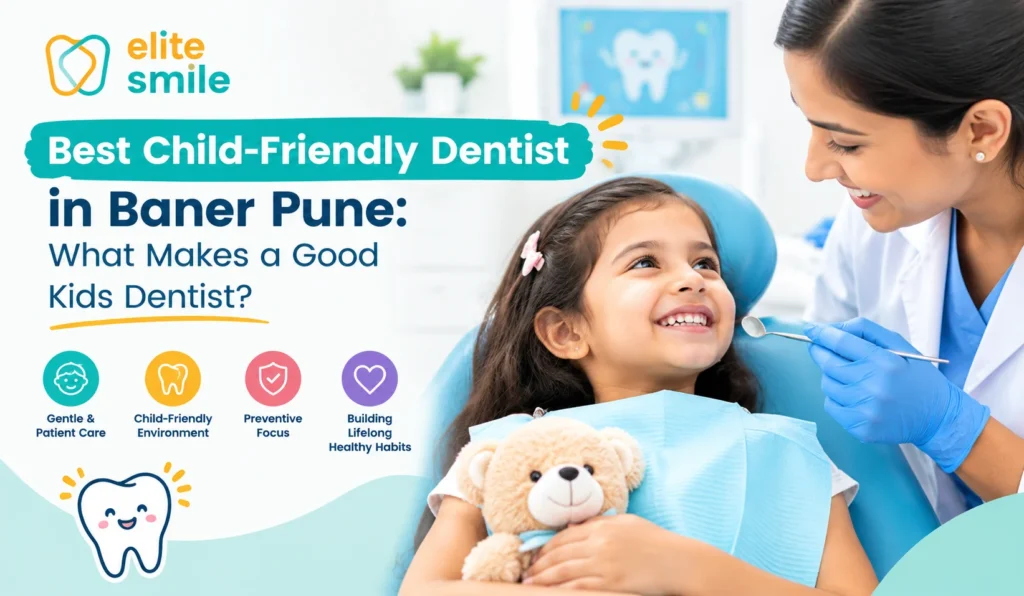
A colourful waiting room and a friendly-looking website don’t necessarily tell you how well a dentist works with children.
When you’re searching for a child-friendly dentist in Baner Pune, the more important questions are: Does the dentist have experience treating children? How do they handle dental anxiety? Do they explain treatment in a way your child can understand? And does the clinic focus on prevention as well as treatment?
This guide explains what child-friendly dental care really means, what parents should check before booking an appointment, and which questions are worth asking during your search. The goal isn’t to tell you which clinic to choose. It’s to give you a practical framework for comparing your options with less guesswork.
Reading time: 14–16 minutes
Best for: Parents in Baner, Balewadi, Aundh, Pashan, Sus and Wakad
Reviewed by: Dr. Krunali Talekar, Elite Smile Dental Clinic
About the Reviewing Clinic
This guide has been reviewed by the team at Elite Smile Dental Clinic in Baner, Pune, led by Dr. Krunali Talekar. The clinic provides children’s dental care along with services including dental implants, braces, aligners, root canal treatment, teeth whitening, tooth extraction, dentures and smile designing.
Parents should always verify a dentist’s current qualifications, experience, available treatments and consultation details before booking.
Need to discuss your child’s dental needs?
Call +91 74988 66079 or check the clinic location and appointment details before visiting.
What Makes a Dentist Truly Child-Friendly?
Child-friendly dentistry isn’t simply about cartoon murals, colourful walls, or a toy box in the waiting room. Those touches can make a clinic more welcoming, but what matters most is how the dentist communicates, examines and treats a child — particularly when the child is nervous, scared or reluctant to cooperate.
A genuinely child-friendly dentist understands that children have different emotional, communication and dental needs at different ages. The goal is to make dental care feel manageable while providing appropriate treatment and helping children develop positive oral-health habits.
A Dentist Who Understands Children’s Behaviour
Children don’t always respond to dental instructions in the same way adults do. A dentist who regularly works with children should be able to recognise signs of fear, discomfort or anxiety and adjust their approach when needed.
This may mean slowing down, explaining what will happen next, allowing the child some time to become comfortable, or changing the way an examination is introduced.
For parents looking for a kids dentist in Baner Pune, experience with children’s behaviour is an important factor to consider — not just the appearance of the clinic.
Age-Appropriate Communication
The way a dentist talks to a three-year-old will naturally differ from how they communicate with a teenager.
A child-friendly dentist uses simple, reassuring language to explain what is happening without making the child feel embarrassed or frightened. They may introduce dental instruments gradually and explain unfamiliar sensations before beginning an examination or procedure.
Good communication should also help the child understand that visiting the dentist is a normal part of looking after their teeth.
A Calm and Comfortable Dental Environment
The physical environment can influence how comfortable a child feels during an appointment.
Noise, lighting, waiting time, unfamiliar equipment and a rushed atmosphere may make some children more anxious. A calm environment, clear communication and a predictable appointment routine can make the experience easier to manage.
However, the environment is only one part of the picture. A child-friendly dental clinic is defined by the people and approach as much as by its interiors.
Patience During Examination and Treatment
Some children cooperate immediately. Others need more time.
A dentist working with children may need to pause, explain something again, allow the child to become familiar with the surroundings, or gradually introduce the examination. Trying to rush a frightened child can make future dental visits more difficult.
Parents should therefore consider whether the clinic’s approach allows enough time for children to feel comfortable rather than treating every appointment exactly like an adult dental visit.
Clear Communication With Parents
Child-friendly dentistry also involves the parent.
After an appointment, parents should understand:
- What was examined or treated
- Whether any dental problems were identified
- Why a particular treatment may be recommended
- What can be done at home
- Whether a follow-up appointment is needed
- What symptoms parents should watch for
Clear explanations help parents make informed decisions about their child’s dental care.
Quick Answer: What Makes a Good Kids Dentist?
A good kids dentist isn’t defined by friendliness alone. Look for a combination of experience with children, age-appropriate communication, patience, anxiety-aware care, preventive dental guidance and clear communication with parents.
For parents comparing a child-friendly dentist in Baner Pune, these practical factors can be more useful than choosing a clinic based only on its appearance, advertising or star rating.
10 Things Parents Should Look for in a Kids Dentist in Baner Pune
Choosing a dentist for your child involves more than checking the clinic’s rating or looking for a colourful waiting room. Use the following checklist when comparing kids dentists in Baner Pune, reviewing clinic websites, or attending your child’s first consultation.
1. Relevant Pediatric Dental Experience
Ask how much experience the dentist has treating children and which age groups they regularly see. Treating a toddler can involve very different communication and behaviour-management needs compared with treating a pre-teen.
If your child has a specific dental concern, such as extensive tooth decay, a dental injury or a tooth-development issue, ask whether the dentist regularly handles similar cases.
2. Child-Friendly Communication
Pay attention to how the dentist communicates with your child.
Does the dentist speak directly to the child, explain what is happening in simple language, and give them an opportunity to ask questions?
A child-friendly approach should help the child understand the appointment rather than making them feel like a passive participant.
3. Experience Managing Dental Anxiety
Some children are comfortable at the dentist, while others may become nervous as soon as they see the dental chair.
Ask the clinic what it does when a child is frightened, cries or is reluctant to cooperate. Look for a specific explanation of the clinic’s approach rather than relying only on phrases such as “gentle treatment” or “painless dentistry.”
4. Preventive Dental Care
Good children’s dental care isn’t only about treating cavities after they appear. Prevention should also be part of the conversation.
Depending on the child’s age and dental needs, this may include:
- Regular dental examinations
- Professional cleaning when appropriate
- Fluoride advice or treatment
- Dental sealants where indicated
- Brushing and flossing guidance
- Dietary and cavity-prevention advice
- Monitoring the development of teeth
A preventive approach can help parents identify potential problems earlier and build better oral-health habits at home.
5. Experience With Baby Teeth
Baby teeth, also called primary teeth, still require proper care even though they eventually fall out.
Ask whether the dentist regularly manages common problems involving primary teeth, including cavities, dental injuries, premature tooth loss and eruption concerns.
Maintaining healthy baby teeth can be important for comfortable eating, speech, oral function and the development of the permanent dentition.
6. Children’s Cavity Treatment
Tooth decay is one of the common dental concerns during childhood. The appropriate treatment depends on factors such as the child’s age, the location and extent of decay, symptoms and whether the affected tooth is primary or permanent.
Ask the dentist to explain:
- How extensive the cavity is
- Whether treatment is necessary
- Which treatment options may be appropriate
- What happens if the problem is left untreated
- How future cavities can be prevented
This gives parents a clearer understanding of both treatment and prevention.
7. Appropriate Dental Technology and Techniques
Technology can be useful when it supports accurate diagnosis, treatment or a more comfortable dental experience.
For example, digital dental imaging may be used when an X-ray is clinically necessary. The type and frequency of imaging should be based on the child’s individual needs rather than performed routinely without a reason.
You can ask why an X-ray or particular technology is being recommended and how it will contribute to your child’s care.
8. Transparent Treatment Planning
Parents should understand what the dentist has found and why a particular treatment is being recommended.
Before treatment begins, ask about:
- The diagnosis
- Available treatment options
- Benefits and limitations of the options
- Number of visits that may be required
- Expected aftercare
- Estimated cost
Clear communication makes it easier for parents to make informed decisions rather than feeling pressured to agree to treatment they don’t understand.
9. Positive Parent and Patient Feedback
Online reviews can provide useful context, but don’t rely on the overall star rating alone.
When comparing a child-friendly dental clinic in Baner, look for recent reviews that specifically mention:
- How the dentist interacted with the child
- Whether nervous children were handled patiently
- How clearly treatment was explained
- The child’s overall appointment experience
- Communication with parents
- Follow-up care
A large number of reviews doesn’t automatically mean a dentist is the right fit for your child. Look for experiences that are relevant to your child’s age and dental needs.
10. Convenient Location and Follow-Up Care
Location matters more than it may initially seem.
Children may need regular preventive appointments or follow-up visits after treatment. A clinic that is reasonably convenient from Baner, Balewadi, Aundh, Pashan, Sus or Wakad can make it easier to maintain those appointments.
Also check practical details such as appointment timings, parking, accessibility and how the clinic handles follow-up questions.
Kids Dentist Checklist
Before choosing a kids dentist in Baner Pune, check whether the clinic offers:
- Relevant experience treating children
- Age-appropriate communication with the child
- A clear approach to dental anxiety
- Preventive dental care and oral-health guidance
- Experience treating baby and permanent teeth
- Appropriate treatment options for children’s cavities
- Clinically appropriate dental technology
- Clear explanation of treatment and expected costs
- Recent reviews describing children’s experiences
- A convenient location and practical follow-up process
Quick tip: Don’t try to judge a children’s dentist from one factor alone. Qualifications, pediatric experience, communication style, preventive approach, treatment transparency and your child’s individual needs all deserve consideration.
Pediatric Dentist vs General Dentist: Which Is Right for Your Child?
Both can provide good dental care for children — the right choice depends on your child’s needs, not a fixed rule.
| Factor | General Dentist | Pediatric Dentist |
|---|---|---|
| Routine children’s checkups | Yes | Yes |
| Baby teeth care | Yes | Yes |
| Child behaviour management | Depends on experience | Specialised focus |
| Preventive pediatric care | Yes | Specialised focus |
| Developing teeth and jaws | Depends on training | Specialised focus |
| Complex pediatric cases | May refer out | May manage or refer, depending on case |
When Parents May Consider a Pediatric Dental Specialist
If your child has high dental anxiety, a complex medical history, developmental needs, or a history of difficult appointments, a pediatric specialist’s additional training can help.
When a General Dentist May Also Provide Children’s Dental Care
For routine checkups and straightforward preventive care, many general dentists with genuine pediatric experience are a perfectly good fit — particularly if the whole family is already comfortable there.
What Dental Treatments Do Kids Dentists in Baner Pune Provide?
Children don’t all need the same dental treatment. Some may only need routine examinations and preventive care, while others may need treatment for cavities, dental injuries or developing teeth and jaws.
Think of the treatments below as a guide to what pediatric dental care may include, rather than a checklist of procedures your child should receive. The appropriate treatment depends on the child’s age, oral health, symptoms and clinical examination.
Children’s Dental Checkups
Regular dental examinations help monitor your child’s teeth, gums, oral hygiene and dental development. A dentist may check for early signs of tooth decay, gum problems, eruption concerns, crowding or changes in spacing.
Routine visits can also give parents practical guidance on brushing, diet and preventing cavities.
Kids Cavity Treatment and Fillings
When tooth decay has developed, the dentist will assess how extensive it is before deciding on treatment.
Depending on the affected tooth and severity of decay, treatment may involve removing the decayed portion and restoring the tooth with an appropriate filling material. Treating decay can help prevent it from progressing and causing pain or infection.
Fluoride Treatment
Fluoride helps strengthen tooth enamel and can reduce the risk of tooth decay.
A dentist may recommend professional fluoride treatment based on factors such as your child’s age, oral hygiene, cavity history and overall risk of developing decay. Fluoride recommendations should be individualised rather than treated as necessary for every child at every visit.
Dental Sealants
Dental sealants are thin protective coatings placed in the grooves of teeth, particularly the chewing surfaces of back teeth where food and plaque can collect.
They may be particularly useful after permanent molars erupt, depending on the child’s cavity risk and the condition of the tooth.
Sealants are a preventive measure; they don’t replace regular brushing, fluoride exposure or dental checkups.
Baby Tooth Treatment
Baby teeth, also called primary teeth, can develop cavities, become damaged or sometimes need treatment because of infection or premature loss.
Although primary teeth are temporary, keeping them healthy can help a child eat comfortably and maintain normal oral function while the permanent teeth develop.
If a baby tooth is lost earlier than expected, the dentist may also assess whether additional treatment or monitoring is needed.
Pulp Therapy for Children
If tooth decay or an injury affects the pulp — the inner part of the tooth containing nerves and blood vessels — more than a simple filling may be required.
Pulp therapy is one treatment that may be considered for an affected primary or permanent tooth, depending on the child’s age, the tooth involved and the extent of the problem.
The dentist should explain the diagnosis and available treatment options before proceeding.
Space Maintainers
If a baby tooth is lost significantly earlier than expected, the neighbouring teeth can sometimes move into the space intended for the developing permanent tooth.
In selected cases, a space maintainer may be recommended to help preserve that space until the permanent tooth is ready to erupt.
Not every child who loses a baby tooth early will require one, so the decision should be based on the individual situation.
Habit Counseling
Some childhood habits can influence the developing teeth and jaws when they continue for an extended period.
A dentist may discuss habits such as:
- Thumb sucking
- Finger sucking
- Prolonged pacifier use
- Certain tongue or oral habits
The timing, frequency and duration of the habit all matter. Parents should discuss persistent habits with a dentist rather than assuming that every habit will automatically cause a dental problem.
Early Orthodontic Evaluation
A child’s teeth and jaws change significantly as they grow. An early dental assessment can help identify concerns such as crowding, unusual tooth eruption, bite problems or jaw-development issues.
An early evaluation doesn’t necessarily mean that orthodontic treatment needs to begin immediately. In many cases, the purpose is simply to monitor development and determine whether further assessment may be useful.
Dental Injury and Emergency Care
Children can injure their teeth while playing, participating in sports, cycling or during falls.
Dental injuries can include:
- Chipped teeth
- Cracked teeth
- Loose teeth
- Knocked-out permanent teeth
- Injured lips or gums
- Trauma to baby teeth
A dental injury should be assessed promptly, particularly when there is significant pain, bleeding, swelling or a displaced or knocked-out tooth.
For a knocked-out permanent tooth, prompt professional advice is especially important because timely management can affect the chances of saving the tooth.
Quick Answer: What Treatments Does a Kids Dentist Provide?
A children’s dentist may provide preventive care, cavity treatment, fluoride and sealants, baby-tooth care, pulp therapy, space management, habit guidance, developmental assessments and dental-injury care. Your child’s actual treatment should be based on their age, symptoms, dental development and clinical examination.
When Should a Child First Visit a Dentist?
First Tooth or First Birthday
This early timing isn’t about treatment — it’s about establishing a baseline and catching any issues before they progress.
Why Early Dental Visits Matter
Early checkups let a dentist monitor eruption patterns, spot early decay, and give parents practical guidance on feeding, teething, and cleaning habits.
What Happens During the First Visit?
Typically a gentle look at the teeth and gums, a conversation with parents, and guidance rather than any invasive procedure.
How Early Visits Can Help Children Become Comfortable
Starting young, before any treatment is actually needed, helps a child build a neutral or positive association with the dental chair.
Signs Your Child Should See a Dentist
- Toothache
- Sensitivity to hot, cold, or sweet foods
- Visible cavities or dark spots on teeth
- Swollen gums
- Bleeding gums
- Broken or chipped tooth
- Dental injury from a fall or impact
- Difficulty chewing
- Early or unusual tooth loss
- Problems with tooth eruption
- Persistent bad breath
- Thumb-sucking or other prolonged oral habits
When a Dental Problem May Need Prompt Attention
Swelling, persistent pain, fever alongside a dental issue, or a knocked-out permanent tooth all warrant contacting a dentist promptly rather than waiting for the next routine checkup.
How to Choose a Child-Friendly Dental Clinic in Baner Pune
Check the Dentist’s Qualifications
Confirm relevant dental qualifications and, where applicable, any additional pediatric training or affiliations.
Look for Relevant Experience With Children
Years in practice matter less than years spent specifically treating children of your child’s age group.
Review the Pediatric Services Offered
Check whether the clinic’s own website or service list actually confirms the treatments your child may need.
Read Recent Reviews Carefully
Prioritise recent reviews that describe an actual child’s experience over generic star ratings.
Ask How the Clinic Handles Nervous Children
A confident, specific answer is a good sign; a vague one is worth probing further.
Understand the Treatment Plan
Ask for the reasoning behind any recommended treatment, and what happens if you choose to wait or seek a second opinion.
Ask About Estimated Costs Before Treatment
Request a written or verbal estimate before treatment begins, including what might change the final cost.
Check Location and Appointment Availability
A clinic that’s hard to reach or frequently booked out can make it harder to stay consistent with preventive care.
How to Tell If a Dentist Is Actually Child-Friendly
“Look for a friendly clinic” isn’t a useful test. This is a more concrete one — most of these you can actually observe during a visit or consultation.
| What to check | What parents can look for |
|---|---|
| Communication | Dentist explains things in child-friendly language, directly to the child |
| Behaviour | Child is given time to become comfortable, not rushed |
| Treatment | Each procedure is explained before it starts |
| Parents | Parents receive clear, complete information after the visit |
| Anxiety | Clinic has a specific, described plan for nervous children |
| Prevention | Conversation includes preventing future problems, not just fixing current ones |
| Reviews | Recent reviews specifically mention children’s experiences |
| Transparency | Treatment options and fees are explained clearly, before treatment begins |
What Should Parents Look for in Kids Dentist Reviews?
A high star rating tells you very little about how a dentist handles children specifically. It’s worth reading a handful of recent reviews in detail rather than relying on the overall score.
Look for reviews mentioning:
- The child’s comfort during the visit
- The dentist’s patience with a nervous or uncooperative child
- How clearly things were communicated
- Whether treatment was explained before it happened
- How anxiety or fear was managed
- The overall appointment experience, including wait times
- Any follow-up communication after treatment
- The outcome of treatment over time
Local search platforms and directory listings often surface exactly this kind of detail through patient reviews, so it’s worth spending a few extra minutes reading past the star rating.
How to Prepare Your Child for a Dental Appointment
Talk Positively About the Dentist
Frame the visit as routine and normal, similar to a doctor’s checkup, rather than something to brace for.
Avoid Scary Words
Words like “shot,” “drill,” or “hurt” can plant fear before the appointment even starts. Simple, neutral language works better.
Explain What Will Happen
A brief, honest explanation of what to expect helps reduce uncertainty, which is often the real source of a child’s anxiety.
Bring a Familiar Comfort Item When Appropriate
A favourite small toy or object can help a younger child feel more secure in an unfamiliar setting.
Avoid Using Dental Treatment as a Threat
Never use a dentist visit as a consequence for bad behaviour — it builds negative associations that can last for years.
Let the Dental Team Build Trust With Your Child
Where possible, let the dentist and staff lead the interaction rather than stepping in for your child at every moment.
How Can Dentists Help Children With Dental Anxiety?
Managing dental anxiety in children usually relies on a combination of communication techniques and pacing, rather than any single trick.
- Tell-Show-Do communication, where each step is explained and demonstrated before it’s performed
- Distraction techniques during treatment
- Gradual familiarisation for children who are especially fearful
- Positive reinforcement for cooperative behaviour
- Simple, age-appropriate communication throughout
- Behaviour-management techniques suited to the child’s age and temperament
Some clinics have also begun exploring technology-assisted distraction, such as video or immersive tools, during procedures. Early research in this area is encouraging but still developing, so it’s worth asking a specific clinic what they actually offer rather than assuming any particular technology is standard.
Common Dental Problems in Children
Children can develop dental problems even when they don’t complain about pain. Regular dental examinations can help identify issues earlier, when they may be easier to manage.
Tooth Decay and Cavities
Tooth decay is one of the most common dental problems in childhood. Parents may notice white or brown spots, visible holes, sensitivity, bad breath or complaints of toothache.
However, early decay may not cause obvious symptoms. If you notice a change in your child’s teeth, it is better to have it assessed rather than waiting for pain to develop.
Early Childhood Caries and Bottle-Related Tooth Decay
Frequent or prolonged exposure to sugary drinks can increase the risk of early childhood caries. The risk can be particularly important when a child regularly falls asleep with a bottle containing milk, juice or another carbohydrate-containing drink.
Parents should discuss feeding and oral-hygiene habits with their child’s dentist, particularly if they notice discolouration or decay on the front teeth.
Gum Problems
Healthy gums generally shouldn’t remain swollen, red or bleed regularly during brushing.
Redness, swelling, tenderness or persistent bleeding can be signs of gum inflammation and should be discussed with a dentist, especially when accompanied by poor oral hygiene or other symptoms.
Early Tooth Loss
Baby teeth normally fall out according to a general developmental pattern. If a primary tooth is lost significantly earlier than expected because of decay, injury or another problem, the dentist may assess whether the surrounding teeth could move into the space.
In some cases, a space maintainer may be considered to help preserve the space needed for the developing permanent tooth.
Thumb Sucking and Pacifier Habits
Sucking habits are common during infancy and early childhood and don’t automatically require treatment.
The potential effect depends on factors such as the child’s age, how frequently the habit occurs, how long it continues and the way the child sucks. Persistent habits may influence the developing teeth or jaws in some children.
Rather than trying to stop the habit abruptly, parents can discuss it with a dentist who can advise whether monitoring or intervention is appropriate.
Teeth Grinding
Some children grind or clench their teeth, particularly during sleep. Occasional grinding may not cause a significant problem, but persistent or forceful grinding can contribute to tooth wear or discomfort.
Mention regular grinding to your child’s dentist so they can check for signs of tooth wear and determine whether further assessment is necessary.
Chipped or Injured Teeth
Falls, sports injuries and everyday accidents can result in chipped, cracked, loose or displaced teeth.
A dental injury should be assessed promptly, particularly if your child has significant pain, bleeding, swelling, a loose or displaced tooth, or an injury involving a permanent tooth.
If a permanent tooth is knocked out, seek urgent dental advice and follow professional instructions for handling and preserving the tooth while travelling to the dentist.
Tooth Eruption and Alignment Concerns
Children’s teeth and jaws change continuously as they grow. Delayed eruption, significant crowding, unusual spacing, crossbite or other changes in the bite may warrant monitoring.
Routine dental visits allow the dentist to follow tooth development over time and recommend an orthodontic assessment when appropriate.
Why Baby Teeth Still Matter
It is easy to assume that baby teeth don’t require much attention because they eventually fall out. They still play an important role during childhood.
Healthy primary teeth can:
- Help children chew food comfortably
- Support normal speech development
- Maintain space for developing permanent teeth
- Contribute to normal oral function while the child grows
- Help children develop consistent brushing and oral-care habits
- Reduce the risk of pain and infection caused by untreated decay
Significant untreated decay in a baby tooth can cause pain and infection. Depending on the tooth and the stage of development, infection can also affect the area around the developing permanent tooth.
For these reasons, a temporary tooth shouldn’t automatically be treated as a tooth that can be ignored.
Common Myths About Children’s Dental Care
Parents often hear conflicting advice about children’s teeth. Here are some common misconceptions worth discussing with a dental professional.
“Baby Teeth Don’t Need Treatment Because They’ll Fall Out Anyway”
Not necessarily.
Baby teeth can develop significant decay, causing pain, difficulty eating and infection. They also serve important functions while permanent teeth are developing.
If your child’s baby tooth has decay or is causing discomfort, have it evaluated rather than assuming it can simply be left untreated.
“Sugar Is the Only Cause of Cavities”
Sugar is an important factor, but it isn’t the whole story.
Cavity risk is influenced by factors including how frequently teeth are exposed to fermentable carbohydrates, oral-hygiene practices, fluoride exposure, saliva and individual susceptibility.
Reducing frequent sugary exposures and maintaining effective oral hygiene can help lower cavity risk.
“Thumb Sucking Always Needs to Be Stopped Immediately”
Not always.
Many young children have sucking habits as part of normal development. The potential dental effects depend on the child’s age, duration and intensity of the habit.
If the habit continues as the child gets older, discuss it with a dentist so you can understand whether intervention is appropriate.
“Children Don’t Need Dental X-Rays”
X-rays aren’t automatically necessary for every child, but they can be useful when clinically indicated.
Dental radiographs can reveal problems that aren’t visible during a routine examination, such as decay between teeth or abnormalities below the gumline.
A dentist should consider the child’s age, dental development, symptoms, cavity risk and previous imaging when deciding whether an X-ray is appropriate.
“A Dentist Visit Is Only Necessary When Something Hurts”
Pain isn’t the only reason for a dental visit.
Some dental problems, particularly early tooth decay, may not cause noticeable symptoms. Preventive appointments can help identify developing problems, monitor dental development and reinforce good oral-health habits before a child develops pain.
Nutrition and Diet Tips for Children’s Oral Health
What and how often a child eats can influence their risk of tooth decay. You don’t need to eliminate every sweet food from a child’s diet, but reducing frequent exposure to sugary foods and drinks can support better oral health.
Practical habits parents can follow:
- Limit frequent sugary snacks and drinks, particularly between meals.
- Choose water as the usual drink between meals.
- Avoid putting a child to sleep with a bottle containing juice or other sugary drinks.
- Offer balanced meals and snacks rather than allowing frequent grazing throughout the day.
- Choose whole fresh fruit more often than sticky, concentrated fruit snacks.
- Include nutritious foods that provide calcium and other important nutrients.
- Maintain a consistent brushing routine with fluoride toothpaste appropriate for the child’s age.
- Ask your child’s dentist about fluoride needs based on their individual cavity risk.
Diet is only one part of cavity prevention. Regular brushing, appropriate fluoride exposure, dental checkups and individual risk factors all matter.
Quick Answer: How Can Parents Help Prevent Cavities in Children?
Focus on a consistent routine: brush twice daily with fluoride toothpaste appropriate for your child’s age, limit frequent sugary foods and drinks, choose water between meals, and maintain regular dental checkups. Your child’s dentist can provide more specific advice based on age, cavity risk and oral-health needs.
How Often Should Children Visit the Dentist?
There’s no single rule that fits every child — frequency should be based on individual risk and your dentist’s recommendation, not a fixed calendar.
- Routine preventive visits for most children, at intervals your dentist will recommend
- More frequent visits for children with a higher cavity risk
- Additional visits for children currently undergoing treatment
- Periodic monitoring for children with orthodontic or developmental concerns
Questions to Ask Before Choosing a Kids Dentist in Baner
- Does the dentist regularly treat children?
- What age groups does the clinic typically treat?
- How do you handle anxious or uncooperative children?
- What happens during a first visit?
- What preventive treatments are available?
- How are children’s cavities typically treated?
- Does the dentist have specific experience with baby teeth?
- What happens if my child has a dental emergency?
- Will treatment options and costs be explained before anything begins?
- What follow-up care will my child need afterward?
Kids Dentist in Baner Pune — Parent Comparison Checklist
If you’re weighing more than one clinic, use the same criteria for each so the comparison is fair.
| Factor | What to compare |
|---|---|
| Qualifications | Relevant dental credentials |
| Pediatric experience | Actual experience treating children, not just general dentistry |
| Approach | Child-centred communication style |
| Treatments | Balance of preventive and restorative care |
| Anxiety support | Specific behaviour-management approach |
| Reviews | Recent, child-specific patient experiences |
| Transparency | Clear treatment and cost explanations |
| Emergency support | Availability for dental injury or sudden pain |
| Location | Convenience for Baner and nearby areas |
| Follow-up | Structure for ongoing preventive monitoring |
There’s no need to look for a “Top 10” ranking here — a transparent comparison against your own priorities is a more reliable way to choose than any unverified list.
Frequently Asked Questions About Kids Dentists in Baner Pune
What makes a good kids dentist?
A good kids dentist combines genuine pediatric experience, age-appropriate communication, patience with anxious children, and clear, transparent communication with parents.
How do I choose a child-friendly dentist in Baner Pune?
Check the dentist’s pediatric experience, ask how they handle anxious children, review recent child-specific feedback, and confirm treatment and costs are explained clearly before you commit.
What age should a child first visit a dentist?
Most guidance recommends a first visit by the child’s first birthday or once their first tooth appears, whichever happens first.
Is a pediatric dentist better for children?
Not necessarily “better” for every child — pediatric specialists have additional training that can help with complex cases or high anxiety, while a general dentist with solid pediatric experience is often sufficient for routine care.
How often should children visit the dentist?
Frequency depends on individual risk factors and your dentist’s recommendation, rather than one fixed rule for every child.
How can I help my child overcome dental anxiety?
Use positive, neutral language about the visit, explain what will happen in advance, avoid using the dentist as a threat, and let the dental team build trust with your child directly.
What are the most common dental problems in children?
Tooth decay, baby bottle tooth decay, gum inflammation, early tooth loss, teeth grinding, and injuries from falls are among the most common issues.
How are cavities treated in children?
Treatment depends on severity — options range from fluoride and monitoring for very early decay to fillings or, for deeper decay, pulp therapy.
Are baby teeth important?
Yes — they support chewing, speech development, and hold space for permanent teeth, so decay or early loss should still be addressed.
How much does a kids dental checkup cost in Baner Pune?
Costs vary by clinic and by the specific treatment needed. Ask for a written estimate before any procedure begins so there are no surprises.
Where can I find a kids dentist near Baner?
Look for clinics serving Baner and surrounding areas such as Balewadi, Aundh, Pashan, Sus, and Wakad, and evaluate them using the checklist in this guide before booking.
Final Parent Checklist for Choosing a Kids Dentist in Baner
Before choosing a kids dentist in Baner Pune, use this checklist to compare your options:
- Relevant experience treating children
- Child-friendly, age-appropriate communication
- A preventive approach to children’s oral health
- Experience treating baby and permanent teeth
- Appropriate options for children’s cavity treatment
- A clear approach to managing dental anxiety
- Treatment explained clearly before it begins
- Costs and treatment options discussed transparently
- Recent reviews that specifically mention children’s experiences
- Convenient location for regular and follow-up visits
The right choice isn’t necessarily the clinic with the highest rating or the most elaborate children’s area. Look at the dentist’s experience, approach to children, treatment options, communication and your child’s individual needs.
Ready to Book Your Child’s Next Dental Visit?
If your child has tooth pain, visible decay, swollen gums, a chipped or injured tooth, or is simply due for a routine dental examination, consider arranging a dental consultation.
Elite Smile Dental Clinic, led by Dr. Krunali Talekar in Baner, Pune, provides pediatric dental care alongside a range of general and family dental treatments.
Parents can contact the clinic to discuss their child’s dental concern, understand the available treatment options and determine whether an appointment is appropriate.
1500+ Happy Patients
300+ Smiles Created
5+ Years of Experience
100% Care & Commitment
Book an appointment: +91 74988 66079
Location: Shop no 103 , 1st floor, Platinum 9, Sus – Pashan Rd, Baner Annex, Baner, Pune, Maharashtra 411069