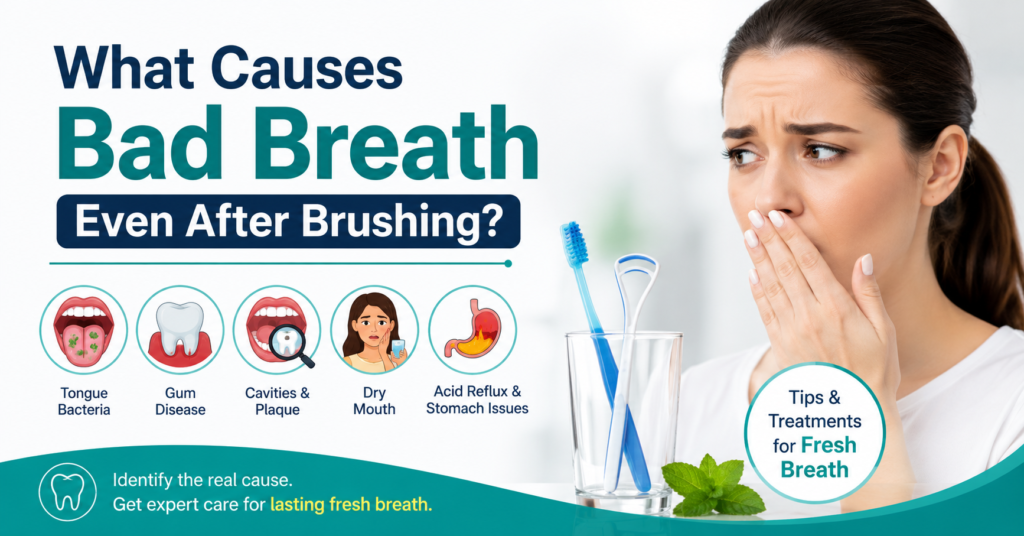
Have you ever brushed your teeth, used mouthwash, and still noticed bad breath just minutes later? You’re not alone. Persistent bad breath, also known as halitosis, affects millions of people and can be embarrassing in social and professional situations. While many assume brushing is enough, the real causes of bad breath often go deeper than the surface of your teeth.
From tongue bacteria and gum disease to dry mouth and digestive issues, several hidden factors can cause bad breath even after brushing regularly. The good news is that identifying the root cause can help you find the right treatment and achieve long-lasting fresh breath.
According to dental experts at Elite Smile, maintaining complete oral hygiene and identifying underlying dental problems early can significantly reduce chronic bad breath issues. If you are searching for the best dental clinic in Baner, choosing experienced dental professionals can help you receive the right diagnosis and personalized treatment for long-term oral health.
In this guide, we’ll explain what causes bad breath even after brushing, common warning signs, and the best ways to get rid of mouth odor permanently.
Why Does My Breath Still Smell After Brushing?
Brushing removes food particles and plaque from the teeth, but bad breath can continue when bacteria remain in other areas of the mouth or body.
1. Bacteria on the Tongue
One of the most common causes of persistent bad breath is bacteria buildup on the tongue. The rough surface of the tongue traps food debris, dead cells, and bacteria that produce foul-smelling sulfur compounds.
Signs:
- White coating on the tongue
- Bad taste in the mouth
- Mouth odor even after brushing
Solution:
- Use a tongue scraper daily
- Brush your tongue gently while brushing teeth
- Use antibacterial mouthwash
Poor Oral Hygiene Habits
Even if you brush regularly, improper brushing techniques can leave behind plaque and bacteria.
Common Mistakes:
- Brushing for less than 2 minutes
- Not flossing daily
- Skipping tongue cleaning
- Using old toothbrushes
Plaque buildup between teeth and near the gumline can quickly cause bad breath and gum infections.
Tips to Improve Oral Hygiene:
- Brush twice daily
- Floss every day
- Replace toothbrush every 3 months
- Clean your tongue properly
Gum Disease and Cavities
Gum disease is a major cause of chronic bad breath. Bacteria trapped inside infected gums release unpleasant odors that brushing alone cannot remove.
Symptoms of Gum Disease:
- Bleeding gums
- Swollen or red gums
- Loose teeth
- Persistent mouth smell
Similarly, untreated cavities can collect bacteria and food particles, leading to foul breath.
Best Treatment:
Professional dental cleaning and gum disease treatment help remove bacteria, plaque, and tartar buildup effectively.
Dry Mouth Can Cause Bad Breath
Saliva naturally cleans the mouth and removes odor-causing bacteria. When saliva production decreases, bacteria multiply rapidly and create bad breath.
Causes of Dry Mouth:
- Dehydration
- Smoking
- Certain medications
- Mouth breathing
- Excess caffeine
How to Prevent Dry Mouth:
- Drink more water
- Avoid tobacco products
- Chew sugar-free gum
- Limit alcohol and caffeine intake
Stomach Problems and Acid Reflux
Many people ask, “Can stomach problems cause bad breath?” The answer is yes.
Acid reflux and digestive issues can allow stomach acids and gases to travel upward, causing unpleasant breath odor.
Common Digestive Causes:
- Acid reflux (GERD)
- Indigestion
- Poor gut health
If your bad breath continues despite good oral hygiene, consult both a dentist and physician.
Tonsil Stones and Sinus Infections
Tonsil stones are small deposits of bacteria and food particles trapped in the tonsils. They often produce a strong unpleasant smell.
Sinus infections and postnasal drip can also cause bacteria buildup in the throat, leading to persistent bad breath.
Symptoms Include:
- Sore throat
- White tonsil stones
- Thick mucus
- Bad taste in mouth
Foods That Cause Bad Breath
Certain foods release strong odors during digestion and through breathing.
Common Bad Breath Foods:
- Garlic
- Onion
- Coffee
- Spicy foods
- Alcohol
Smoking and tobacco products also dry the mouth and worsen mouth odor significantly.
How to Get Rid of Bad Breath Permanently
The best way to stop bad breath naturally is by combining proper oral hygiene with professional dental care.
Brush and Floss Properly
Brushing twice daily and flossing regularly helps remove food particles, plaque, and bacteria that cause mouth odor. Many people skip flossing, allowing bacteria to grow between teeth and gums. Using fluoride toothpaste and proper brushing techniques can significantly reduce persistent bad breath and improve overall oral hygiene.
Clean Your Tongue Daily
The tongue can trap bacteria, dead cells, and food debris that produce unpleasant odors. Cleaning your tongue every day with a tongue scraper or toothbrush helps remove sulfur-producing bacteria and keeps your breath fresh. Tongue cleaning is one of the simplest yet most effective ways to control bad breath naturally.
Use Mouthwash for Bad Breath
An antibacterial mouthwash helps kill odor-causing bacteria in areas your toothbrush cannot reach. Alcohol-free mouthwash is recommended because it prevents dry mouth, which can worsen bad breath. Using mouthwash after brushing and flossing can provide long-lasting freshness and improve your daily oral hygiene routine.
Stay Hydrated Throughout the Day
Drinking enough water helps wash away food particles and bacteria while keeping the mouth moist. Dry mouth reduces saliva production, allowing bacteria to multiply quickly and create bad breath. Staying hydrated throughout the day supports saliva flow and naturally prevents mouth odor caused by dehydration.
Visit a Dentist Regularly
Professional dental checkups help identify hidden causes of bad breath such as gum disease, cavities, plaque buildup, or oral infections. Regular teeth cleaning removes tartar that brushing cannot eliminate. According to Dr. Krunali Talekar, routine dental visits play an important role in maintaining fresh breath and healthy gums.
Avoid Smoking and Tobacco Products
Smoking and tobacco use dry out the mouth and leave strong unpleasant odors that contribute to chronic bad breath. Tobacco also increases the risk of gum disease and oral infections. Quitting smoking can improve oral health, freshen breath naturally, and reduce the buildup of harmful bacteria inside the mouth.
Improve Your Diet and Eating Habits
Certain foods like garlic, onions, and sugary snacks can trigger bad breath and increase bacterial growth. Eating fresh fruits, vegetables, and fiber-rich foods helps clean the mouth naturally and improve digestion. A balanced diet combined with proper oral hygiene can reduce mouth odor and support long-term fresh breath.
Best Dental Treatments for Persistent Bad Breath
If home remedies do not work, professional dental treatment may be necessary.
Professional Dental Cleaning
Professional dental cleaning removes plaque, tartar, and bacteria hidden below the gumline that regular brushing cannot reach. This treatment helps improve oral hygiene, freshens breath, and prevents gum infections that commonly cause chronic bad breath.
Gum Disease Treatment
Gum disease treatment includes deep cleaning procedures like scaling and root planing to remove bacteria from infected gums. Treating gum infections reduces inflammation, bleeding, and unpleasant mouth odor while improving overall gum health and oral hygiene.
Cavity and Tooth Decay Treatment
Untreated cavities trap food particles and bacteria, leading to persistent bad breath. Dental fillings and restorative treatments help remove decay, eliminate bacterial buildup, and restore healthy teeth for long-lasting fresh breath and improved oral health.
Tongue Cleaning and Oral Hygiene Therapy
Professional tongue cleaning removes bacteria, dead cells, and food debris from the tongue surface. Dentists may also recommend customized oral hygiene routines and antibacterial mouthwash to control odor-causing bacteria and maintain fresh breath daily.
Halitosis Diagnosis and Consultation
A professional halitosis diagnosis helps identify the exact cause of persistent bad breath, including dental issues, dry mouth, sinus infections, or digestive problems. Dentists create personalized treatment plans to provide effective and long-term bad breath solutions.
Natural Remedies for Bad Breath
Some home remedies can help reduce mouth odor naturally.
Effective Remedies:
- Salt water rinse
- Green tea
- Clove chewing
- Fennel seeds
- Probiotics for bad breath
These remedies work best when combined with good oral hygiene habits.
When Should You See a Dentist?
Visit a dentist if:
- Bad breath lasts longer than 2 weeks
- Gums bleed frequently
- You notice loose teeth
- There is pain while chewing
- Mouth odor continues after brushing
Early diagnosis helps prevent serious oral health problems.
Tips to Prevent Bad Breath Daily
- Brush twice daily
- Floss regularly
- Clean your tongue every day
- Drink plenty of water
- Avoid smoking and tobacco
- Reduce sugary foods
- Schedule regular dental checkups
Frequently Asked Questions (FAQs)
1.Why does my breath still smell after brushing?
Bad breath after brushing is usually caused by bacteria on the tongue, gum disease, cavities, dry mouth, or digestive problems. Brushing cleans teeth, but odor-causing bacteria can remain in other areas of the mouth. Regular flossing, tongue cleaning, hydration, and professional dental checkups help reduce persistent bad breath effectively.
2. Can stomach problems cause bad breath?
Yes, stomach problems like acid reflux, indigestion, and poor digestion can contribute to bad breath. Acid and gases from the stomach may travel upward and create unpleasant mouth odor. If oral hygiene is good but bad breath continues, consulting both a dentist and doctor can help identify underlying digestive issues.
3. Does tongue cleaning remove bad breath?
Yes, tongue cleaning helps remove bacteria, food particles, and dead cells that collect on the tongue surface. These bacteria often produce foul-smelling sulfur compounds responsible for bad breath. Using a tongue scraper or gently brushing your tongue daily can significantly improve breath freshness and support better overall oral hygiene.
4. Is bad breath a sign of gum disease?
Persistent bad breath can be an early sign of gum disease. Bacteria trapped around infected gums release unpleasant odors and may also cause bleeding, swelling, and sensitivity. If bad breath continues despite brushing and flossing, visiting a dentist for professional cleaning and gum evaluation is highly recommended for prevention.
5. How do dentists treat halitosis?
Dentists treat halitosis by identifying the exact cause of bad breath. Treatment may include professional teeth cleaning, gum disease treatment, cavity fillings, tongue cleaning guidance, and oral hygiene recommendations. In some cases, dentists may also suggest medical evaluation if digestive or sinus problems are contributing to mouth odor.
6. Can dehydration lead to bad breath?
Yes, dehydration reduces saliva production, allowing bacteria to grow more easily inside the mouth. Saliva naturally cleans the mouth and removes odor-causing particles. Drinking enough water throughout the day helps keep the mouth moist, improves oral hygiene, and reduces the risk of dry mouth and bad breath naturally.
Conclusion
Bad breath even after brushing is usually caused by bacteria, gum disease, dry mouth, tongue buildup, or underlying medical conditions. Brushing alone may not completely eliminate mouth odor if deeper dental issues exist.
Maintaining proper oral hygiene, staying hydrated, and visiting a dental professional regularly can help you get rid of bad breath permanently. If you experience persistent bad breath, professional halitosis treatment and dental cleaning can restore fresh breath and improve your oral health.
For expert oral care and advanced bad breath treatment in Pune, you can consult the specialists at Elite Smile Dental Clinic for a personalized dental evaluation and treatment plan